newsfeed
2023
- product design
- ui/ux
Google Reader closed in 2013. The services that followed filled the functional gap, but very few have matched the experience that made Reader worth missing — an interface calm enough to get out of your way and let the content be the point. newsfeed is a speculative redesign asking what that product could look like, rebuilt with a decade of UI/UX progress behind it.
The Interface
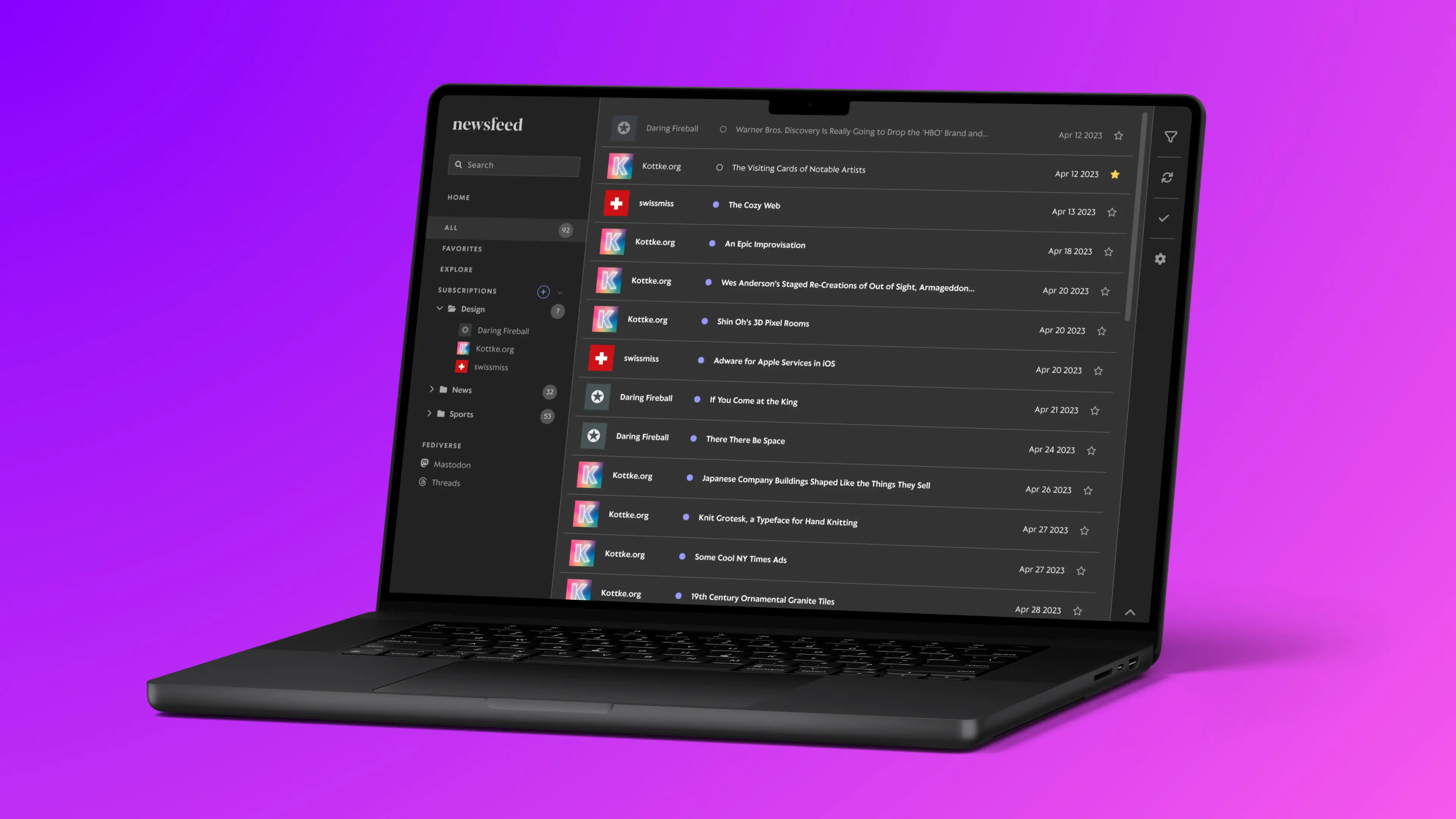
The core layout preserves the three-panel structure Reader users will recognize — left sidebar for organization, centre column for the feed, right panel for the article — while updating each zone with current best practices. A vertical navigation rail handles secondary actions: filtering, marking as read, jumping between articles. It stays off the critical reading path, present when you need it and invisible when you don’t.
Typography
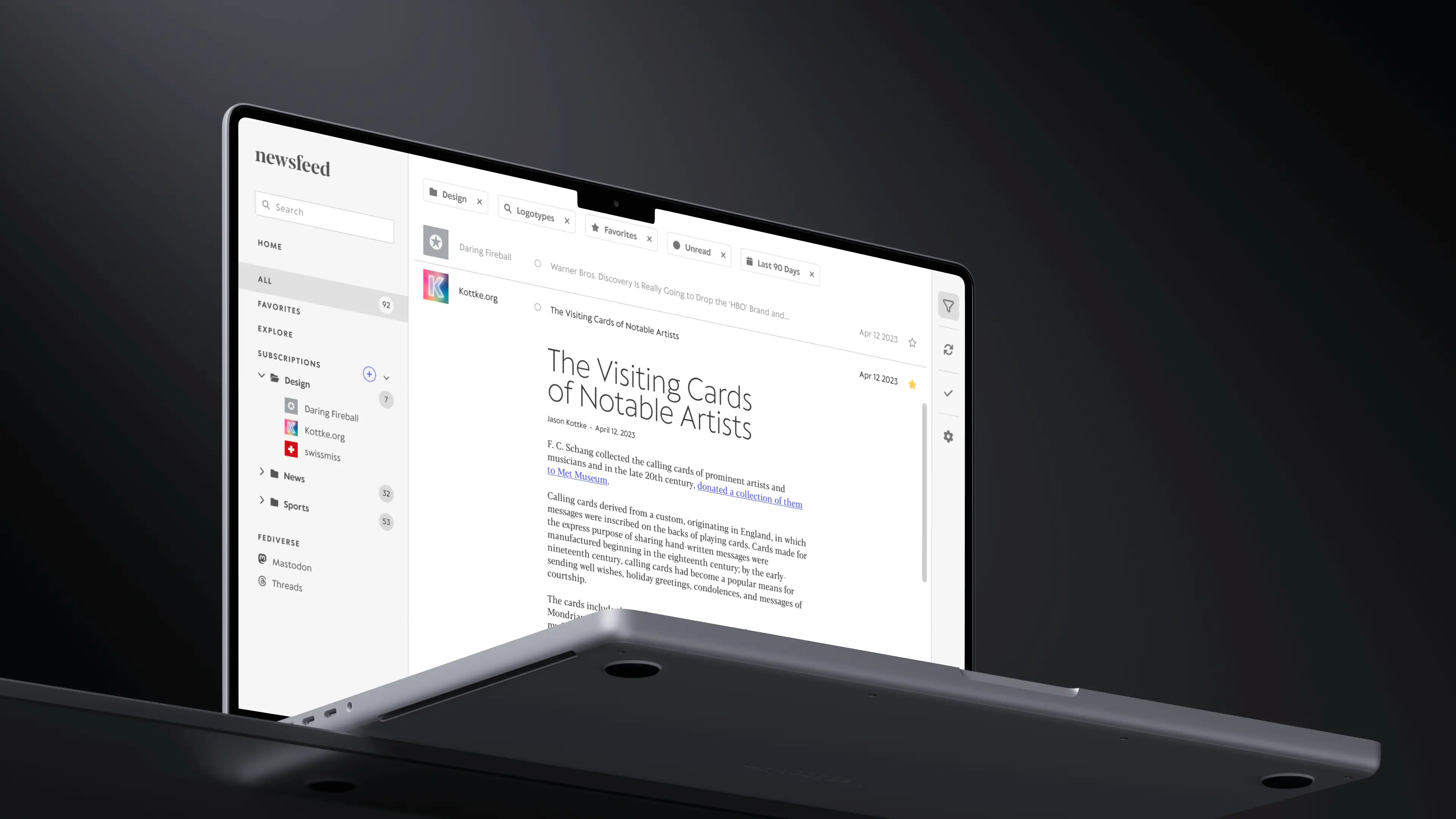
The reading experience lives or dies on type. I chose Blacker Pro and Klein Text from Zetafonts — a serif pairing that balances visual warmth with the kind of sustained readability long-form content demands. The goal was an interface that actively invites you to settle in, not one you endure.
The Dashboard
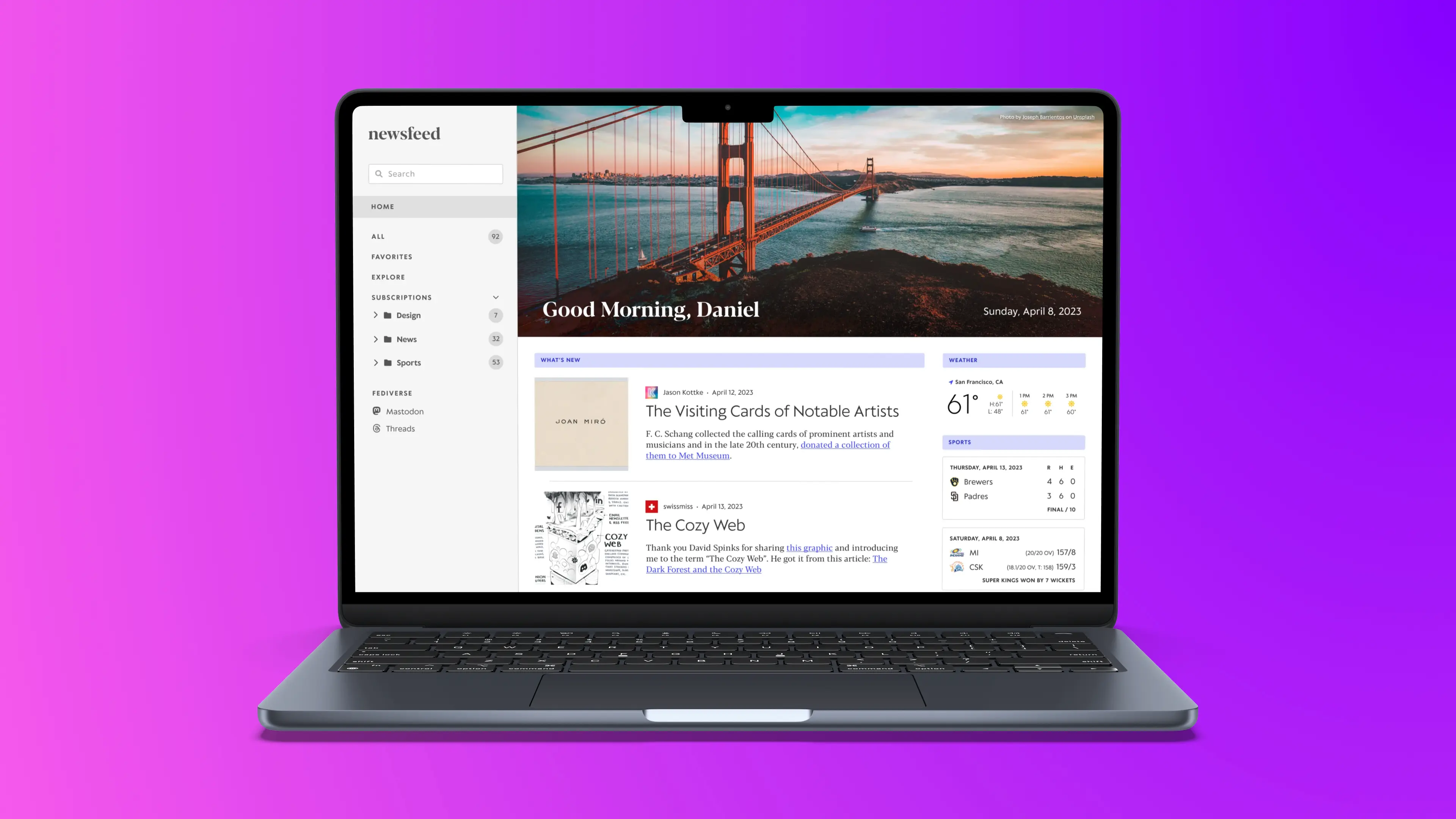
The most significant addition is a home screen dashboard — a newspaper-front-page moment that gives the reader a curated snapshot before they dive into the feed. Featured articles, weather, sports scores, and widget slots that can be extended via open APIs. As the reader’s behavior accumulates over time, this surface becomes smarter: surfacing relevant feeds, suggesting subscriptions, and building a reading environment that’s genuinely personalized.
Mobile
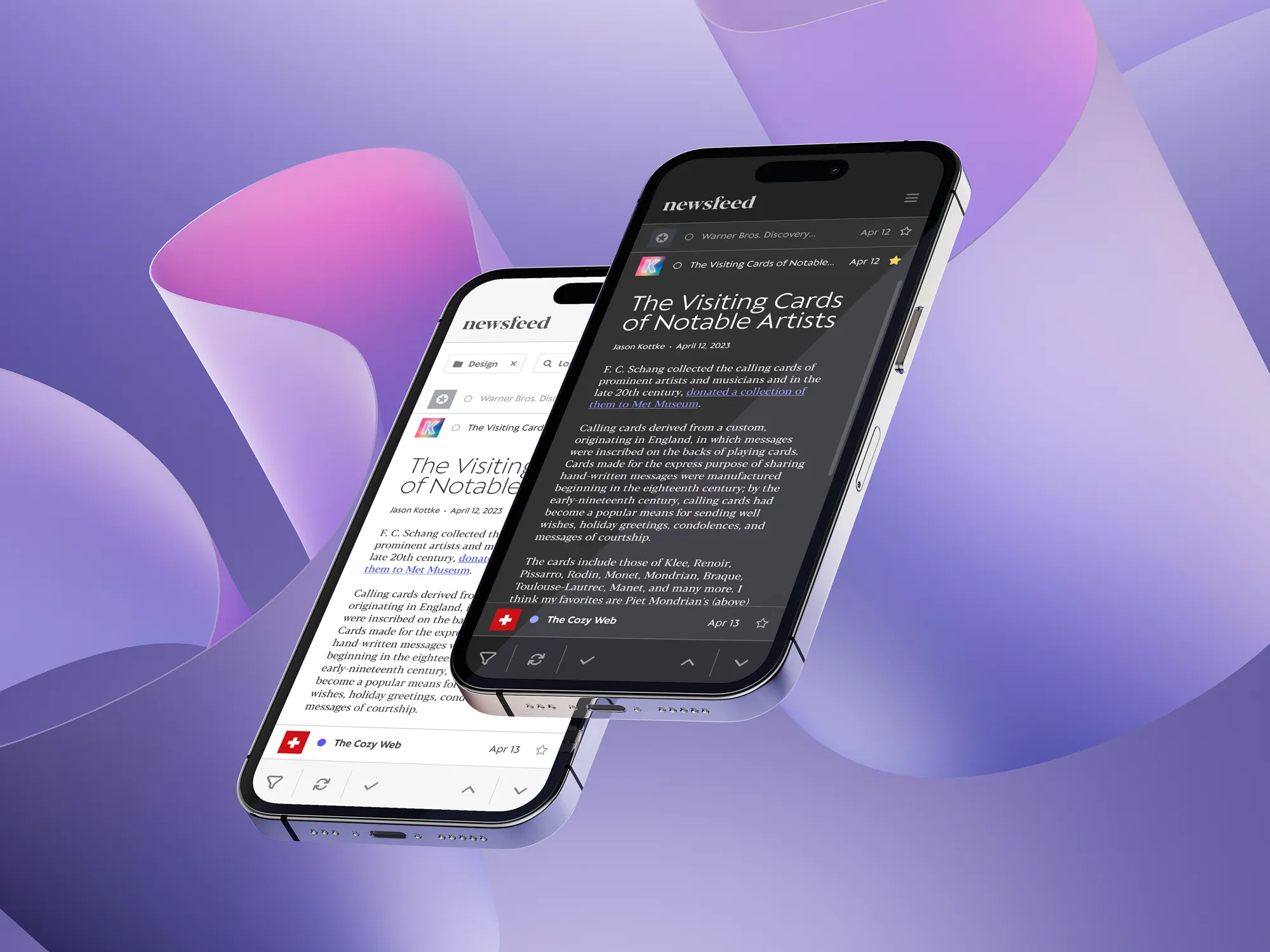
The interface adapts cleanly to mobile — the same calm, minimal reading experience without compromise, across device and operating system.
The Philosophy
Social sharing buttons were a deliberate omission. newsfeed is designed as a quiet space — somewhere the content is the entire point, and the noise of the social web stays outside. That restraint was central to what made Google Reader worth remembering, and it’s the thing its successors have most consistently failed to hold.